
Beauty from Chaos (Ros' Blog)
I’m writing this four days before my wedding. I’ve been going round my house getting everything ready for my new husband to move in after we’re married, as we’re going to be living here temporarily. I’ve lived here on my own for most of the last nine years, and everything in the house has been decorated to my liking. I’ve been trying to look at it through his eyes and judge how he might see it and whether it will suit his taste!
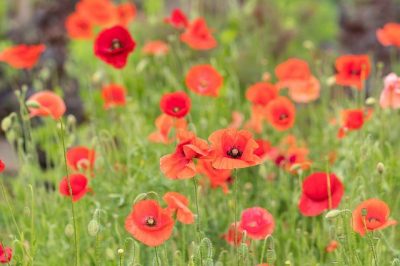
There’s one theme that recurs in several parts of the house. Over the stairs is a photo of a poppy field. In the garden the last of this summer’s poppies are still flowering. In the bedroom, the curtains have poppies on them, and there’s another photo which a friend gave me when I moved in with a close-up of poppies and the caption, “Stand still and consider the wondrous works of God. Job 37.14”
I’ve always had a great fondness for poppies. It’s not just their stunning beauty, the way they brighten up a roadside verge, or that their name in French is so delightful – coquelicots! But I love the way they rise out of chaos, imposing order and beauty on it.
They are cultivated as garden ornamentals, and some varieties as a source of the drug opium. In fact humans have been cultivating poppies for 7,000 years, going right back to Mesopotamia in the early days of the Bible. They have been found in ancient Egyptian tombs, and doctors of that time would use their seeds as a painkiller. But it’s the wild varieties that fascinate me. Although modern methods of agriculture are causing a decline in the common poppy, in Roman times it was seen as a symbol of fertility because it grew in the crop fields and it was used to celebrate the gods.
Poppy seeds lie dormant in the ground for a long time and often germinate only after a sudden disturbance of the soil. This is why they are seen springing up along the verges of newly built roads. The best known example of this is of course the poppies that sprang up all over the battlefields of the Somme, their poignant red colour a stark reminder of what had taken place on that soil.
But to me this is also a beautiful parable of the way God so often works in our lives. How often is it a sudden trauma – an accident or sudden illness resulting in disability, for example, or, as in my case, giving birth to a disabled child, which becomes the very area of our lives where God brings beauty and flourishing? While we are going through the experience, it can seem painful, disruptive and even hopeless. One of my friends has a word for this – she calls it a lifequake. It’s a good description of the disturbance these events cause in our lives. I look back at the distress of the early days of my daughter’s life, the daily struggle to keep her alive when she first came home from hospital, the despair at the gloomy prognosis we were given by doctors who didn’t tell us (or perhaps had never noticed) how much joy and delight such a child also brings to their family.
Yet it was out of that explosive disruption to the soil of my life that seeds of spiritual growth began to germinate and I started to put my roots down into God. The blooms that came from it – a depth of relationship with God I had never previously known; the deflection from the previous self-centredness of my life; the desire to use my experiences to help other people; the testimony I have of God’s wonderful grace and joy in hard times – all came directly as a result of those troubled times and have made my life so much richer.
So here’s the main reason why I love poppies – not simply for their beauty and the rich colour they add to our countryside, but because they are a reminder of how God uses even the hardest of times to bring glory, richness and beauty into our lives. Maybe you have a testimony you’d like to share with us of how God has worked in your life through hard times. You can do so by emailing it to info@throughtheroof.org. But don’t expect an immediate reply; I’m going on honeymoon for a while.
Writing Disability (Ros' Blog)
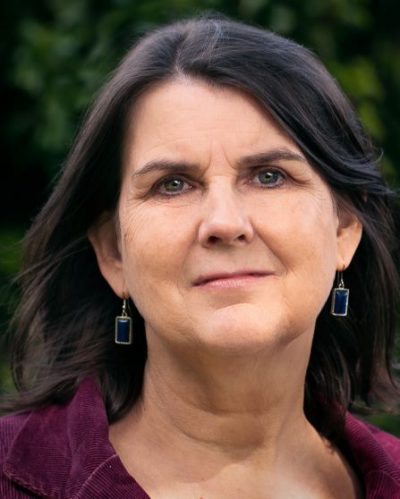
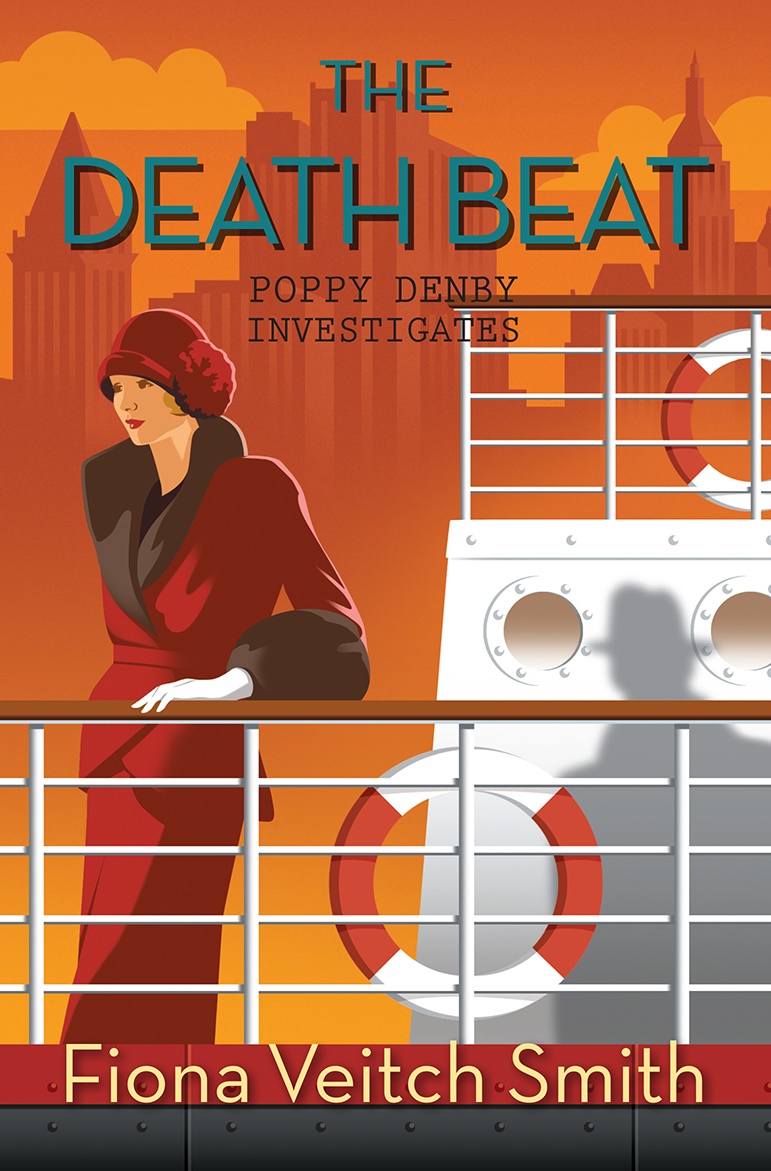
This week’s blog is a guest post by Fiona Veitch Smith. Fiona is a Christian novelist who writes fiction for the general market. She writes of how her third book in the Poppy Denby Investigates series (murder mysteries set in the 1920s) received a review criticising her for including ‘too many disabled characters’. The reviewer prefaced the jibe with ‘now it’s not as if I’m against diversity, but…’ then said the author was just trying to be politically correct. Fiona writes:
I went back to the book (The Death Beat) and counted the characters who had some form of disability – it turned out to be 20% of the cast. This included someone who has his leg amputated after being pushed into a machine, someone who was recovering from a stroke, someone with a learning disability, a character with dwarfism and a paraplegic character.
I had a mutter about this on an Association of Christian Writers forum and was told by Ros Dakin (regular contributor to Through the Roof blog) that people with disability make up around 20% of the general population, so my cast ratio simply reflected reality. The thing is, I never counted. I never thought to myself: right, I need to put in some more disabled characters to get up to 20%. I never thought: I need to be politically correct and inclusive. You see, for me, people living with a disability or neurodiversity are just part of the fabric of life. My mother became disabled when I was 11, so it is something I have grown up with. My daughter is autistic. My dad became disabled after a stroke two years ago. In my world – real and fictional – some people just happen to be disabled and some don’t. Just like some are of different ethnicities, gender or sexuality.
Some of my characters ‘need’ to be disabled for the purposes of the plot (like the poor chap who loses his leg, and the paraplegic Aunt Dot, a suffragette who was run down by a police horse during a protest). But some of them just happen to be like that when they introduce themselves to me. I hadn’t realised Poppy Denby’s editor, Rollo Rolandson, was a dwarf until I wrote their first encounter: when he stood up Poppy saw that he only came up to her chest. I was as surprised as Poppy! Rollo doesn’t ‘need’ to be disabled, but he is. However, he is not a victim. He is the most assertive and go-getter character in the entire series. I do, at times, note some of the challenges and abuse he faces as a small person, but my main focus is on his skills and personality – as it would be with any of my characters.
 However, Rollo is a secondary protagonist, not the main character. I would be reluctant to write a primary protagonist with a disability from the ‘inside’ because I do not know what it is like to personally be disabled. But I do know what it’s like to live with variously abled people – and that is reflected in my novels.
Why then, don’t more conventionally abled novelists include variously abled characters in their books? I think there are two reasons. The first is fear of getting it wrong or accused of insulting or patronising disabled people. An example is Mark Haddon’s The Curious Incident of the Dog in the Night-time which has an autistic boy as the central character. Haddon received both praise and criticism for his portrayal of autism – and some of the criticism was intense. Authors (and publishers) see that and it makes them nervous. The second reason is that many authors simply don’t ‘see’ disabled people as potential characters – unless, perhaps, as victims. This I hope will change. And I hope that my books in their small way will contribute to that.
Editor’s note: We would love our readers to contact us and tell us their favourite novels that feature disabled characters. Top of my list would be Skallagrigg by William Horwood.
Fiona Veitch Smith is the author of the Poppy Denby Investigates novels, Golden Age-style murder mysteries set in the 1920s (Lion Fiction). The first book, The Jazz Files, was shortlisted for the CWA Historical Dagger, while subsequent books have been shortlisted for the Foreword Review Mystery Novel of the Year and the People’s Book Prize. Book 5, The Art Fiasco, is coming out in October 2020. www.poppydenby.com
Questions of Healing (Ros' Blog)
When I speak at churches on behalf of Through the Roof, and when I staff our exhibition stand at events, people sometimes come up to me and ask questions. And the two questions I am most frequently asked are, “What about disability and healing?” and, “Will I/my child/disabled people be healed in heaven?” These are asked not only about people whose impairments are physical, but also those which are cognitive and intellectual. I have written about this before, but as it comes up so often, I thought it was worth revisiting the topic.
Because I am asked the questions so frequently, and because, as the parent of a woman with complex multiple disabilities, they are questions I myself have asked over the years, I have spent a lot of time thinking about them. I don’t claim to have the answers – some things we will know only in eternity – but I do get a feel for what is indicated in the Bible.
I recently did some personal study on the healing miracles of Jesus, and I noted some interesting things. Firstly, a miraculous healing of a disabled person in Jesus’ day rescued him or her from a fate that included shame, marginalisation, enforced begging for a living, exclusion from society and religious contempt. Maybe these were the things Jesus was keen to eradicate, and a physical healing was the most immediate way to achieve that.
Secondly, Jesus almost always healed in response to a direct, spoken request from either the disabled person or their close family or friends. He gave them the dignity of expressing their own response, by posing questions such as, “What do you want me to do for you?” (Mark 10.51) or, “Do you want to get well?” (John 5.6)
Thirdly, on the few occasions when Jesus healed people of His own initiative and without waiting to be asked, it appears to have been always for one of two reasons. Either the person was clearly indicating a desire to be healed which they were unable to articulate in words, such as the man from the region of the Gadarenes who came and knelt at His feet (Mark 5.6) and the woman who would not have been permitted to speak because she was in the synagogue, a male preserve (Luke 13. 10-13). Or else they were being despised and excluded and by healing them Jesus restored their dignity and brought them into a place of inclusion and acceptance in the community. Examples include the man with the shrivelled hand (Mark 3. 1-5) and the man with excessive fluid retention (Luke 14. 1-6). The two things Jesus never did were to make anyone feel that the disabled person was unacceptable and needed fixing, and he never told anyone that their lack of faith had prevented their personal healing.
The function of healing is to rectify distress and dis-ease. The disabled person who is at ease with his or her condition, and whose limitations cause no distress probably feels no need for healing. Even where distress is present, it’s just as likely to be caused by societal barriers and attitudes. Remove these and the distress will be resolved even though the physical condition remains unchanged. Some disabled people will pray for healing because that is their real desire. There is no one-size-fits-all.
Turning to the second question, “Will disabled people be healed in heaven?” this is something to which I’ve given quite a lot of thought and study. When I was teaching A level philosophy, one of the traps I warned my students not to fall into was that of making category errors. Examples of category errors would be questions such as, “What is the sound of the colour blue?” or “What is the taste of Mozart’s A major piano sonata?” With the exception of people who experience synaesthesia, for most of us the colour blue does not fall into the category of things which make a sound and a piece of music does not fall into the category of things which have a taste. Another example might be, “How many hours are there in eternity?” Eternity does not come into the category of things which can be measured by duration.
I suspect that this question of whether disabled people will be healed in heaven is one such category error. Paul talks about what our resurrection bodies will be like. When he describes the bodies we currently inhabit, he speaks of them as having characteristics such as being perishable, dishonourable, weak and natural (1 Corinthians 15. 42-43). It’s easy to see how a body which has those characteristics might come into the category of things which either do or don’t have impairments, which either do or don’t function as the human body was designed to do, or which may or may not be hindered or marginalised by societal barriers and demeaning attitudes. But our resurrection bodies, he says, will be imperishable, glorious, powerful and spiritual. And these bodies, I suspect, will simply not fall into this category. The concept of impairments versus full function or of being susceptible or not susceptible to external barriers, cannot apply to a being which is imperishable, glorious, powerful and spiritual.
So I think that we are probably asking the wrong questions. Perhaps what we should be asking is not, “Can this person be healed?” but, “Since this person’s outer self, like my own, is wasting away, how can I connect with their inner self which is being constantly renewed?” (2 Corinthians 4.16)
As for asking if people with intellectual disabilities can be healed, or will be healed in heaven, I find it interesting that in the Mosaic law, in the list of impairments which preclude someone from taking the office of a priest, there is no such ban on anyone with a cognitive impairment. Can it be that we view as a disability something which God does not see in that way at all? John tells us that when we see Jesus we shall be like Him, because we will see Him as He is (1 John 3.2). This accords with Paul’s words that we all, with unveiled face, behold as in a mirror the glory of the Lord (2 Corinthians 3.18). That word all is very important. There are no exceptions listed. When we acquire the habit of seeking God’s face, we begin to reflect God’s glory.
People with learning disabilities, who may connect with God from their spirit without any troubling intellectual questions to distract them, reflect who He is and show Him to the rest of us. Why would we view that in terms of a lack or impairment? Many of the people whom society describes as having learning disabilities are in fact streets ahead of their peers in terms of living in the moment, being themselves and having no pretentions or façade. Surely this is how we are supposed to live in the presence of God? We have much to learn from these brothers and sisters, and it is for the Church to find a way of providing the platform from which they can teach us what they know and have experienced.
Follow this link for all of Ros' blog posts for Through the Roof
“We May Not Think As Quickly, But We Feel As Deeply” (Ros' Blog)

Two recent encounters give a painfully poignant insight into the reality of lockdown for people with significant learning disabilities. In the first, a young woman is visited by her mother for the first time in 15 weeks since the beginning of lockdown. The meeting takes place at a distance of 2 metres in the garden of the care home where the young woman lives. This woman has sufficient cognitive ability to understand that a virus is the cause of the separation, although she doesn’t fully understand why. She knows that a vaccine will get rid of the virus but can’t understand why one isn’t available today.
The conversation goes like this:
Young woman: What Mum going to get when there’s a vaccine? (And she taps her upper left arm with her right hand.)
Mother: A vaccination?
Young woman: No. What Mum going to get when there’s a vaccine? (Taps her arm again.)
Mother: A jab?
Young woman: No. What Mum going to get when there’s a vaccine? (Taps her arm again.)
Mother: I don’t know. You tell me. What’s Mum going to get when there’s a vaccine?
Young woman: (Tapping her arm again.) Close to me.
In the second scenario a father is visiting his profoundly disabled, non-verbal daughter in the garden of her care home, again for the first time in 15 weeks since the beginning of lockdown. His daughter is wheeled into the garden of the care home. As she sees her father, her face lights up in a beautiful smile, and she leans forward in her wheelchair as far as she can with her arms outstretched. He tries to explain that he isn’t allowed to give her a cuddle and has to stay two metres from her, but this is beyond her comprehension. As he fails to respond to her outstretched arms a look of confusion comes over her face and she soon begins to sign in Makaton that she wants to go to bed.
It would be impossible, I think, to overestimate how hard the separation from family has been for people with profound learning disabilities. When I was about 13, a MENCAP poster campaign had a profound impact on me and changed forever the way I viewed disabled people. The poster depicted a small boy with Down’s Syndrome who was crying, and a slightly older girl, also with Down’s Syndrome, with her arm around him, comforting him. And the caption was, “We may not think as quickly but we feel as deeply.”
Imagine feeling so deeply the separation from family, but not understanding why your parents have suddenly stopped visiting you, and not having the vocabulary to put your feelings into words. You can’t offload to those close to you because you don’t have the ability to explain to them what you are going through. Good and genuinely caring care staff will read the non-verbal communication, but not all care staff can do this, and even if they can, it does not alleviate the confusion as to why family visits have been suspended for many months. What a frightening and disorientating world it must be to inhabit.
What can churches do to help people facing such a difficult experience? Practical solutions are limited, but above all churches can pray. Pray for the confusion and fear to be overcome by the peace of God. Pray that in the absence of family, the sense of God’s very near presence will be a daily reality. God can and does answer such prayers for people with learning disabilities. But also, send cards with cheerful pictures and simple messages such as, “we haven’t forgotten you”, “we are thinking of you”, “we love you”. Chat to people over Zoom or Skype. Even very profoundly disabled people can be helped to engage with this. Wave to them over the video link and play their favourite songs. Send them presents based on their interests. Contact their families to find out more about their interests and do something relevant to that – send gifts or share pictures and videos of things that they love to see, via Zoom. Eventually when the rules permit, visit in the garden (at present this is restricted to family).
And pray that this horrible pandemic will soon be over so that families can be reunited again, which is always the will of God: “A father to the fatherless, a defender of widows, is God in his holy dwelling. God sets the lonely in families, he leads out the prisoners with singing.i”
'A Unique Voice in Lockdown' - the Summer 2020 Vital Link
The Summer 2020 Vital Link is now available! Like everyone, we've had to make a lot of adjustments to keeping working through Coronavirus pandemic, and a lot of our trips or events have had to be postponed. There's still loads of work continuing, especially with our Roofbreaker Church Inclusion project, and we're excited to tell you all about it. You can download a PDF of the Vital Link below, or please contact us for a print, large print, braille, or CD audio copy.
We've also included a link here to all of the web pages, articles, interviews and videos mentioned in this issue--to hopefully make it easier to take a look at them all.
Here's the video reflecting on a time of shielding that Fiona mentions in her front page article...
Tim was invited to join an online gathering of ‘Pray London’ to highlight the needs of disabled people at this time to a new audience for prayer (you can see Tim at 48:56 mins into the programme, here… Follow this link to watch the Pray London Video).
He also promoted Through the Roof which partnered with Your Neighbour.org who interviewed David and Carrie Grant – musicians and parents to 4 children with additional needs. Watch and listen to their insights on the ‘Leaders Lunches’ video-conference event on: Follow this link to watch the 'Leaders Lunches' Video Event.
Fiona and Ros have both had articles featured on Christian websites: Follow this link to Fiona's article in Woman Alive and Follow this link to Ros' article on disabled leaders in the Bible
You can also read the newsletter in the Joomag viewer with better controls and zooming, if you prefer. Follow this link to the Joomag site version of the Vital Link.
Relating From The Heart (Ros' Blog)

I recently had the privilege of joining a zoom conversation between a young woman and her father who are not currently able to meet up because of lockdown rules. There might seem to be nothing unusual about such a conversation, but what struck me was that this interaction was between a non-verbal woman with a very profound intellectual disability and a man of great intellect with a PhD in mathematics. The distance between their cognitive abilities could not be wider. And the interaction between them was both fascinating and heart-warming to observe.
As she turned to the computer screen and caught sight of her father, her whole face lit up in a broad smile, and I observed a look of delight on his face in response. It occurred to me how vast is the gulf, intellectually and in every other conceivable way, between us and God, and yet how great the mutual delight when we come to Him in worship.
And yet, as with the scene I was sitting and watching, maybe the gulf is not so great. This man is her father – she exists by his will, and there is a deep bond of love between them. And is this not also true of us with God? He has created us in His own image, and he has created us for relationship with him. This young woman’s disabilities are no barrier to relationship with her father; his love for her is not diminished by them, any more than God’s love for us is diminished by the disparity between His abilities and ours.
Something else struck me about the encounter, too. This young woman, non-verbal, helpless in many ways and needing almost everything done for her, revealed in her smile an immense capacity for relationship and for love. And I thought about how so many people with profound intellectual disabilities are denied the opportunity to express that, especially once their parents are no longer alive. The deep relationships which they form are with their paid carers. And as soon as the carer leaves and gets another job, the relationship is immediately terminated, often for reasons beyond the person’s comprehension, and each time it happens it leaves another wound in his or her spirit.
Maybe most church members don’t think very often about forming a deep friendship with someone whose cognitive ability is very limited. But I can think of one couple, a teacher and a lawyer, who have made a point of doing exactly that in their own church. This couple not only give a great gift of friendship to people whose main friends would otherwise be paid carers, but they also receive an enriching relationship of love and care into their own lives as a result.
I have written it many times before, but I think it bears repeating. Friendships are not brain to brain but heart to heart and spirit to spirit. An intellectual disparity is insignificant when the heart is engaged in loving. Here is a beautiful and much needed role that churches can fill, befriending those whose only friends are paid to care for them, and being a rock of stability in their lives when those paid carers move on. The world looks on them as the least, but in the Kingdom of God they are the greatest. And as Jesus said, “Inasmuch as you have done it to the least of these, you have done it to Me.” What steps could you take to building this kind of friendship with someone who needs it?
Photo by Artem Podrez from Pexels
Online Event: Learning from Lockdown--Is Online Church the Answer for Disabled People?
Free Online Event
Saturday 4th July
10.30 to 12
Spaces are limited: Please register for the event
We are excited to invite you to our third free UK-wide online event:
Learning from lockdown - is online church the answer for disabled people?
We are pleased to be joined by Matt Lloyd, a church leader from Bromley.
Join us to...
- Think about what the church has learned from lockdown and how this should inform the future inclusion of disabled people
- Share your own feedback and thoughts with others
- Pray together
This event is slightly different from our last two – Matt has recorded his talk and will then be available to answer questions. Please book early to receive the link for Matt’s talk and to be able to send in any questions you have for Matt.
Please register for the event to receive the link and tell us about any access requirements. You will receive an email with full information.
This will be a great opportunity to think through these issues and learn together.
Reflecting on 'Shielding'
Fiona, our Deputy Church Inclusion Coordinator, has posted this great video on Facebook, about her experiences of shielding during the early days of lockdown. It's prompted a lot of comment and discussion--we'd love to hear your experiences and thoughts, follow this link to email us.
Re-imagining Church: Garden or Window Box? (Ros' Blog)
Today's blog post was originally featured on Ros' personal blog -- you can find the post by following this link.
There is an ongoing debate about the closure of church buildings during the pandemic. On one side are people who are concerned above all for public health and not wanting to prolong the crisis. On the other hand there are those who quote Hebrews 10. 25 (‘Do not forsake the assembling of yourselves together’) and wish to see churches reopen and normality resume in their worship services as soon as possible. Here are my thoughts.
Firstly, let’s not forget the pastor in the DRC who encouraged his congregation to continue to meet during the Ebola outbreak, thereby contributing massively to the spread of Ebola in his region, resulting in his own death and that of many of his congregation. Do we really want people to be able to turn round and point their finger at the Church and say, you people made it worse?
Secondly, people like my daughter who lives in a care home and has been condemned by this pandemic to a separation from her family which causes her a great deal of anguish, and people like my lovely colleague who is having to shield and has not been able to leave her city flat for 3 months, will be the ones who suffer the longer this pandemic continues. People who feel safe to meet up in public because they are at low risk from this virus need to consider that if their action prolongs the pandemic, it also prolongs isolation and separation for those less fortunate than themselves.
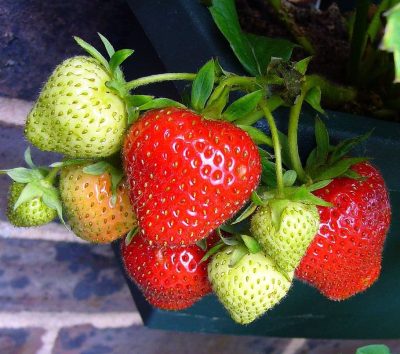
But thirdly, here is something I’ve observed. Looking round my garden as May ends and June begins, I can see that it’s a season of rapid growth. The roses that I pruned right down have shot up and are covered in buds. The vegetable seeds which I sowed weeks ago are suddenly sprouting at a rapid rate. My strawberries are laden with fruit. And in my own church I’m seeing something parallel to that in a spiritual realm. People are growing spiritually at a rapid rate. When we communicate via the church WhatsApp group or hold our meetings on Zoom, people are sharing deeper spiritual insights than ever before, reporting deepening understanding of and relationship with God, and are sharing the many ways in which God is using them to bless their neighbours and share the Gospel in deed as well as word.
It is as if we have been uprooted from our window box where we were crammed in with little room for growth of roots or foliage, and transplanted into a wide garden with plenty of space to spread our stems and branches, put down deeper roots and produce abundant foliage, blooms, and eventually, fruit. Why would we want to be stuffed back into that cramped old window box again?
Yes, I miss people, especially living on my own. Yes there are days when I would give anything to be back in the church building just so I am in reach of an actual person who can give me a physical hug. But these things are less important than what God is doing. Looking at church history, growth has almost always come through scattering, usually as a result of persecution. It’s not persecution that is scattering us, but an invisible virus. Nevertheless, personal growth and Church growth are the results. Let’s not be in a hurry to shut that all down again and scramble back into our old window box where we can look how we used to look and do things the way we used to do them. God’s dreams for us are far bigger than that.
And when we do finally begin to meet again, let’s not forget that some of our disabled brothers and sisters have, for the first time, been able to participate on a level playing field with everyone else when church has been online. Let’s not retreat into our inaccessible buildings and close the door in their faces again, but let’s become a church that uses every conceivable tool at our disposal to ensure that every member is fully included, especially the disabled ones of whom Jesus said in Luke 14 that his house is not full when they are absent.
Thank you Fastprint!
Thank you to Fastprint for supplying us with free fundraising stickers for Through the Roof events. Look out for them on bags, resources, and all sorts of other materials!